
Space Force kills OCX GPS ground control system, citing ‘insurmountable’ challenges
The Pentagon will instead continue with a current ground control system managed by Lockheed Martin.
The Pentagon will instead continue with a current ground control system managed by Lockheed Martin.

The upgrade to be performed under then new contract would allow Lockheed Martin's AEP ground system to replace RTX's long-troubled OCX program for future GPS IIIF birds.

Explore how software, edge AI and resilient connectivity can strengthen military logistics in contested environments. Join Breaking Defense on Oct. 21 and earn 1 CPE credit.

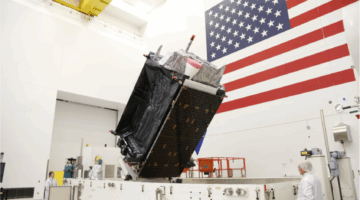
The GPS network continues to prove its unmatched reliability, and it’s only getting stronger.

A spokesperson for Space Operations Command (SpOC) explained that government-led testing now will commence, but that an updated operational acceptance date "is not yet available."

Maj. Gen. Stephen Purdy, who is the Department of the Air Force acting head for space acquisition, said the OCX ground system for GPS satellites has now made it through testing of 97 percent of its requirements.
Outgoing DoD space acquisition czar Frank Calvelli told Breaking Defense in an exclusive interview that he is confident the troubled OCX software will be up and running by year-end.

There is no single answer to the drone threat, pushing the Pentagon toward a broader mix of defenses.

To make matters worse, the Defense Department is now facing down a possible shortage of microchips and processor cards to allow ground vehicles, ships and aircraft to access GPS at all, according to a new report by the Government Accountability Office.

The continuing delays in making the GPS jam-resistant M-Code signal available to military users "increase risk that U.S. and allied warfighters will be unable to conduct successful operations in future contested environments due to the lack of access to modernized GPS position, navigation, and timing (PNT) information," the 2023 Annual Report of the Director of Operational Test & Evaluation finds.
The Space Force has set contradictory requirements for the number of M-code capable GPS satellites, the Government Accountability Office found.

"We know that the way of warfare has changed, and we're going to be having difficulties with jamming, and having difficulties getting our position navigation and timing signals to our warfighters," said AFRL Director Maj. Gen. Heather Pringle.


Army vehicles like Bradley need greater power at the sprocket for speed, braking, and manueverability.

Defense giant hopes other firms will adopt the open-source interface system allowing plug-and-play in orbit.

The FY23 request is $7 billion more than the $17.4 billion the service asked for in FY22, with much of it going towards R&D efforts.


The U.S. Space Force’s Space Systems Command and Raytheon Intelligence & Space are enhancing mission management and mission-data processing to shift the focus of GPS operations from satellite command and control to basic, user-oriented effects-based operation.
"OCX and the user equipment piece do not come online until the third quarter of 2023; that is when we would expect to have our initial operational capability for the GPS enterprise across across all segments: space, ground and user equipment," said Space and Missile Command's Col. Ed Byrne.